Showing posts with label Postmodernity. Show all posts

Friday, January 14, 2011

A Great Pairing

I recently got both of these for Christmas. (ok, well I used my Christmas "splurge" $ and a gift card to get these for myself for Christmas. (Can I just say the Complete Collection Ed. of Lost is AWESOME!)

I will admit, that I was/am a big "Lost" fan. I think it was a brilliant show that might have even been a little ahead of it's time. But like the show or not, and like the way Season 6 ended or not, this show was one of the biggest and best social commentaries of our age. I think that we have only begun to scratch the surface of what "Lost" had to offer.

is a great pairing when going back through the series. I am also a big fan of the ".....and Philosophy" series of books. This book is a great entry into some of the greatest themes from the history of philosophy as seen through great philosophers of our day! Philosophy has made it's home in the academia portion of the mind, but as "Lost" shows us (as well as the "Philosophy and Popular Culture" series), Philosophy was an ongoing conversation with life and the way we live. The best shows and movies are overflowing with deep and eternal philosophical concepts. In addition, every decision we make each day is tied to some deep-seeded philosophical understandings within ourselves! Philosophy (and theology seen as a branch of philosophy) is very practical... more than we even consciously realize.

Along with the ever helpful, "Lostpedia" (Which I always spent an hr. on each day after the new episode aired), this book delves into some of the major philosophical themes that made the show so great. Truly a Postmodern show, "Lost" holds a mirror up to our lives, hopes, fears, dreams...all of the things that drive our lives and the ways that we choose to live. So do yourself a favor, get the absolute most that "Lost" has to offer: Ourselves! And having a little aid like the "Ultimate Lost and Philosophy", will help make sure that something as simple as "entertainment" can truly give you insight to self-understanding!

Thursday, September 30, 2010

Coffeehouse Theology: A Review


Coffehouse Theology by Ed Cyzewski, is a book that I read a long time back. I since have used this in a small group setting (with the discussion guide). I did not receive this through Ooze since I already owned it. But Why not lend my review anyway?

AS many have said, the best place for this book is in the newly emerging, questioning modernity (but don't know that language), seeking understanding of frustration with the "typical" way of doing things in churches. This is a soft introductory book that I would put in my pile with Velvet Elvis, and A New Kind of Christian. these are typically the introductory books I hand out after someone has come to me to "vent" and ask questions. It usually puts some words into their feelings. It would depend on the person and where they are in their grasp of their thoughts and feelings on which book I offer. VE is a good one for people who want the less cerebral and technical words. ANKoC is more for those that have a grasp on what they are experiencing and want the technical on a base level. Coffeehouse Theology, is more in the middle.

However, here's the beauty of the book; where it works! It's in the title, Coffeehouse.... a place to gather and converse. This is a book meant to be talked about. I sometimes think that the discussion guide was written before the book... but the book to me is a discussion guide (There is also a Bible Study Guide as well). It is not meant to be a dissertation on pomo/postcoloinal theology (something that some have blasted because "theology" is in the title). It is supposed to be a jumping point, a conversation starter, a place to begin discussion on a different type of "theology"! To me, the title is ironic because it is more starting a conversation where people's long-held theologies fall apart. It is almost an anti-theology except that it explores some new (new to the person I would suggest this to) theological ideas that are floating about.

That all being said, there is some meat on this. Cyzenwski is trying to write to a tough audience. An audience that is new to Postmodern theology/thought, while at the same time challenge them not to throw everything out the window. It is a fine balance.

The book is well organized, easy to follow, and great to discuss. Others have analyzed this book well, so I simply point out the beauty of the book: to initiate conversations; to RELATE experiences! To CONNECT! This book is small and an easy read for most because the real magic happens when you take the few pages and turn them into a coffeehouse afternoon of respectful sharing and exploration!

A review for theOoze

Tuesday, August 10, 2010

Now Reading: Colors of God


Up for review for theooze.com: Colors of God: Conversations about Being the Church

FROM THE PUBLISHERS:

OK, so the Church is broken, now what?

If you’re like me, you’ve read a lot of books containing theory as to the why and the what of church problems and solutions. But what if we had a collaborative effort of church theorist-practitioners who produce solid paradigms, but do so in the context of sharing and testing in a local congregation? We do: It’s called The Colors of God.

This memorable collaboration, involving Dave Phillips, Quentin Steen and Randall “Peg” Peters takes readers on an unforgettable intellectual and practical exploration of the Christian faith as it is lived out in neXus church in Abbotsford, BC.

In Colors of God, the three authors utilize a unique conversational style to raise key questions and challenge theological assumptions about what constitutes Christian faith and how to embody that within a local church community. This book finds itself within the ‘emerging church’ stream and yet moves beyond simple theological arguments.

Instead, the authors attempt to lay out a useful framework for what it means to practically live out one’s faith in light of the Kingdom of God. Using colors to depict the different aspects of the Kingdom, they move beyond creed and belief into color, art, action and grace. Something I especially appreciate is their seriously playful effort to incorporate the grace-soaked insights of Episcopal priest Robert Farrar Capon into the DNA of their congregation.

Colors of God is the perfect book for anyone who questions aspects of their beliefs and longs to integrate better assumptions with a holistic faith community.

_____---______----__

http://nexuschurch.com - the congregation these authors started

Sunday, June 28, 2009

Faith, Hope and Love Pt.1

I've been officiating a good number of weddings the last couple of months and since the passage on love from 1 Corinthians has been read in almost all of them, I have been reflecting a lot on that passage. I have been especially focusing on the last part of the passage: And now these three remain: faith, hope and love. But the greatest of these is love. (1 Cor. 13:13).

It is amazing to me when a passage gets stuck in my head and keeps reoccurring, I begin to hear, see and read things that directly correlate to my ongoing thoughts on theses passages. Perhaps it is serendipity or perhaps it is the voice of God at work through the everyday things that we usually are too busy or self-absorbed to hear the wisdom being shared.

This first post is on hope. I am reading Michael J. Fox's newest memoir, Always Looking Up, and I ran across a passage from an interview with George Stephanopoulos after Rush Limbaugh decided to take a jab at Fox after a political ad in which Fox's Parkinson's symptoms were very prevalent. Eventually in the interview, it came back around to Rush and other conservative comments about stem cell research saying that people like Fox, pushing the possibilities of stem cell research, was pandering a false hope. Here's an excerpt of that exchange:
George: "I'm going to ring up Rush Limbaugh one more time. One f the things he says is that when you are talking about all these cures, you're giving people false hope and that it is cruel"

Michael: "Which is crueler? To not have hope or to have hope? And it's not false hope. It's an informed hope. But two steps forward and two steps back, you know? It's a process. It's how this country was built. It's what we do. It seems to me that in the last few years, eight, ten years, we've just stopped. We've become incurious and unambitious..."( ALU pg. 150).
I have thought a lot about this statement. I don't want to get into a debate about stem cell research, for that is not the purpose of this thread of thought. Rather, I really have broadened my thoughts on hope after reading this exchange.

I've written before on hope. Is there such a thing as false hope? I suppose there is if someone is intentionally promising something that they KNOW is false. For instance, promising a child a reward for having a good day, knowing all along that you have no intention of seeing that promise through. Yet hope by it's very nature is illusive. The outcome is rarely a certainty, for we never know what is on the other side an event, choice, or even this life. That is why we hope! Faith and hope go hand-in-hand because neither one can produce tangible proof of the outcome of the circumstances in which these mindsets are present. Otherwise there would be no need for either faith or hope by their very natures.

Hope is more than wishful thinking. And I like here what Fox says about hope. He says the hope he and his foundation give is an "informed hope". I think that is the nature of true hope. I think this is one of the biggest things that distinguishes hope from simply wishful thinking.

So, let us segue to the idea of Christian hope. It is, as I have mentioned in the past, a (if not THE) central message/theme of the Christian faith, Bible, and mission and ministry of Christ. When the narratives and teachings of the Bible speak of hope, it is never in an ambiguous and uninformed way. In fact, it is the opposite. There seems to be an understanding that hope is informed, and in fact, we have a responsibility to "seek" in order to keep our hope informed!

Hope is active! It is not a feeling; it is not fairy tale wishes! It is seen as very practical. It is something that infects and affects our daily lives. As Fox says, it is "one step forward, two steps back... It's a process". Just like faith, hope is both a PART of the journey, and a journey in itself. Pragmatic hope is the hope that never fails. Why? because in the end it never fails our expectations. Participating in this process of hopefulness produces practical expectations.

But more than that, is inspiring....awe-inspiring! It inspires not only others, but it inspires yourself. It drives the creativity and imagination of people. I think that's why the statement Fox makes about us becoming "incurious and unambitious" strikes a chord with me. I see it so much in the world of religious life. People are settling for what they have, when it is far less than what God is calling them towards. People are settling for wishful thinking because 1) they are being taught that wishful thinking and hope are one in the same, and 2) because it is easier to sit and wish than it is to participate in the on-going process of hope.

People ARE very curious by nature, and it is because they are seeking hope in this world where we can turn on the TV, or walk across town and pay a visit to the hell that many people live in each day. The hell on earth that many of us settle for in our own lives, thinking we are helpless victims. But Christ's message of hope was different. It was not wishful thinking that one day we would be magically saved from the terrible situations that plague our world. Instead he gathered people and said, not only can you make a difference in your own situation and make it better, but hope is so powerful that you can actually go out and heal the hell that other people are living in. You can take away that hell and deliver heaven on earth... the Kingdom of God is at hand....in your hands!

Something (in my opinion) evil happens when we discourage the natural curiosity in people that produces an "informed hope"....a responsible hope, and replace it with wishful thinking! We need this hope now more than ever in this hurting world. I am convinced that the true message of Christ is more relevant today more than ever, but we first have to embrace that this message is far more than the fairy tale for which modern Christianity has settled. The idea that the whole of the message is about eternity in some ethereal after-life is decaying the bigger messages of Christ and the Kingdom of God. Please know I'm not saying that Heaven doesn't exist, what I am saying is that we have a calling to the here and now as well. And that call is as urgent, perhaps more-so if I may be so bold, than the eternal salvation message. Yet I don't think that one message is exclusive to the other. It certainly wasn't for Christ!

"And these remain; Faith, Hope and Love..." Hope is the infectious driving force that we have been given. Hope is the engine propelling us forward on this journey. It is the force that gives us ambition and curiosity. How are we using hope, and how are we encouraging a true hope in others?

Thoughts?

A Jesus Manifesto

Len Sweet and Frank Viola wrote and published a document on the 22nd of this month entitled A Jesus Manifesto. This is a great and inspiring document that has drawn a lot of good discussion. I repost it here to help in its circulation and continuing discussion.
A Magna Carta

for Restoring the Supremacy of

Jesus Christ

a.k.a.

A Jesus Manifesto

for the 21st Century Church

by Leonard Sweet and Frank Viola

Christians have made the gospel about so many things … things other than Christ.

Jesus Christ is the gravitational pull that brings everything together and gives them significance, reality, and meaning. Without him, all things lose their value. Without him, all things are but detached pieces floating around in space.

It is possible to emphasize a spiritual truth, value, virtue, or gift, yet miss Christ . . . who is the embodiment and incarnation of all spiritual truth, values, virtues, and gifts.

Seek a truth, a value, a virtue, or a spiritual gift, and you have obtained something dead.

Seek Christ, embrace Christ, know Christ, and you have touched him who is Life. And in him resides all Truth, Values, Virtues and Gifts in living color. Beauty has its meaning in the beauty of Christ, in whom is found all that makes us lovely and loveable.

What is Christianity? It is Christ. Nothing more. Nothing less. Christianity is not an ideology. Christianity is not a philosophy. Christianity is the “good news” that Beauty, Truth and Goodness are found in a person. Biblical community is founded and found on the connection to that person. Conversion is more than a change in direction; it’s a change in connection. Jesus’ use of the ancient Hebrew word shubh, or its Aramaic equivalent, to call for “repentance” implies not viewing God from a distance, but entering into a relationship where God is command central of the human connection.

In that regard, we feel a massive disconnection in the church today. Thus this manifesto.

We believe that the major disease of the church today is JDD: Jesus Deficit Disorder. The person of Jesus is increasingly politically incorrect, and is being replaced by the language of “justice,” “the kingdom of God,” “values,” and “leadership principles.”

In this hour, the testimony that we feel God has called us to bear centers on the primacy of the Lord Jesus Christ. Specifically . . .

1. The center and circumference of the Christian life is none other than the person of Christ. All other things, including things related to him and about him, are eclipsed by the sight of his peerless worth. Knowing Christ is Eternal Life. And knowing him profoundly, deeply, and in reality, as well as experiencing his unsearchable riches, is the chief pursuit of our lives, as it was for the first Christians. God is not so much about fixing things that have gone wrong in our lives as finding us in our brokenness and giving us Christ.

2. Jesus Christ cannot be separated from his teachings. Aristotle says to his disciples, “Follow my teachings.” Socrates says to his disciples, “Follow my teachings.” Buddha says to his disciples, “Follow my meditations.” Confucius says to his disciples, “Follow my sayings.” Muhammad says to his disciples, “Follow my noble pillars.” Jesus says to his disciples, “Follow me.” In all other religions, a follower can follow the teachings of its founder without having a relationship with that founder. Not so with Jesus Christ. The teachings of Jesus cannot be separated from Jesus himself. Jesus Christ is still alive and he embodies his teachings. It is a profound mistake, therefore, to treat Christ as simply the founder of a set of moral, ethical, or social teaching. The Lord Jesus and his teaching are one. The Medium and the Message are One. Christ is the incarnation of the Kingdom of God and the Sermon on the Mount.

3. God’s grand mission and eternal purpose in the earth and in heaven centers in Christ . . . both the individual Christ (the Head) and the corporate Christ (the Body). This universe is moving towards one final goal – the fullness of Christ where He shall fill all things with himself. To be truly missional, then, means constructing one’s life and ministry on Christ. He is both the heart and bloodstream of God’s plan. To miss this is to miss the plot; indeed, it is to miss everything.

4. Being a follower of Jesus does not involve imitation so much as it does implantation and impartation. Incarnation–the notion that God connects to us in baby form and human touch—is the most shocking doctrine of the Christian religion. The incarnation is both once-and-for-all and ongoing, as the One “who was and is to come” now is and lives his resurrection life in and through us. Incarnation doesn’t just apply to Jesus; it applies to every one of us. Of course, not in the same sacramental way. But close. We have been given God’s “Spirit” which makes Christ “real” in our lives. We have been made, as Peter puts it, “partakers of the divine nature.” How, then, in the face of so great a truth can we ask for toys and trinkets? How can we lust after lesser gifts and itch for religious and spiritual thingys? We’ve been touched from on high by the fires of the Almighty and given divine life. A life that has passed through death – the very resurrection life of the Son of God himself. How can we not be fired up?

To put it in a question: What was the engine, or the accelerator, of the Lord’s amazing life? What was the taproot or the headwaters of his outward behavior? It was this: Jesus lived by an indwelling Father. After his resurrection, the passage has now moved. What God the Father was to Jesus Christ, Jesus Christ is to you and to me. He’s our indwelling Presence, and we share in the life of Jesus’ own relationship with the Father. There is a vast ocean of difference between trying to compel Christians to imitate Jesus and learning how to impart an implanted Christ. The former only ends up in failure and frustration. The latter is the gateway to life and joy in our daying and our dying. We stand with Paul: “Christ lives in me.” Our life is Christ. In him do we live, breathe, and have our being. “What would Jesus do?” is not Christianity. Christianity asks: “What is Christ doing through me … through us? And how is Jesus doing it?” Following Jesus means “trust and obey” (respond), and living by his indwelling life through the power of the Spirit.

5. The “Jesus of history” cannot be disconnected from the “Christ of faith.” The Jesus who walked the shores of Galilee is the same person who indwells the church today. There is no disconnect between the Jesus of Mark’s Gospel and the incredible, all-inclusive, cosmic Christ of Paul’s letter to the Colossians. The Christ who lived in the first century has a pre-existence before time. He also has a post-existence after time. He is Alpha and Omega, Beginning and End, A and Z, all at the same time. He stands in the future and at the end of time at the same moment that He indwells every child of God. Failure to embrace these paradoxical truths has created monumental problems and has diminished the greatness of Christ in the eyes of God’s people.

6. It’s possible to confuse “the cause” of Christ with the person of Christ. When the early church said “Jesus is Lord,” they did not mean “Jesus is my core value.” Jesus isn’t a cause; he is a real and living person who can be known, loved, experienced, enthroned and embodied. Focusing on his cause or mission doesn’t equate focusing on or following him. It’s all too possible to serve “the god” of serving Jesus as opposed to serving him out of an enraptured heart that’s been captivated by his irresistible beauty and unfathomable love. Jesus led us to think of God differently, as relationship, as the God of all relationship.

7. Jesus Christ was not a social activist nor a moral philosopher. To pitch him that way is to drain his glory and dilute his excellence. Justice apart from Christ is a dead thing. The only battering ram that can storm the gates of hell is not the cry of Justice, but the name of Jesus. Jesus Christ is the embodiment of Justice, Peace, Holiness, Righteousness. He is the sum of all spiritual things, the “strange attractor” of the cosmos. When Jesus becomes an abstraction, faith loses its reproductive power. Jesus did not come to make bad people good. He came to make dead people live.

8. It is possible to confuse an academic knowledge or theology about Jesus with a personal knowledge of the living Christ himself. These two stand as far apart as do the hundred thousand million galaxies. The fullness of Christ can never be accessed through the frontal lobe alone. Christian faith claims to be rational, but also to reach out to touch ultimate mysteries. The cure for a big head is a big heart.

Jesus does not leave his disciples with CliffsNotes for a systematic theology. He leaves his disciples with breath and body.

Jesus does not leave his disciples with a coherent and clear belief system by which to love God and others. Jesus gives his disciples wounds to touch and hands to heal.

Jesus does not leave his disciples with intellectual belief or a “Christian worldview.” He leaves his disciples with a relational faith.

Christians don’t follow a book. Christians follow a person, and this library of divinely inspired books we call “The Holy Bible” best help us follow that person. The Written Word is a map that leads us to The Living Word. Or as Jesus himself put it, “All Scripture testifies of me.” The Bible is not the destination; it’s a compass that points to Christ, heaven’s North Star.

The Bible does not offer a plan or a blueprint for living. The “good news” was not a new set of laws, or a new set of ethical injunctions, or a new and better PLAN. The “good news” was the story of a person’s life, as reflected in The Apostle’s Creed. The Mystery of Faith proclaims this narrative: “Christ has died, Christ has risen, Christ will come again.” The meaning of Christianity does not come from allegiance to complex theological doctrines, but a passionate love for a way of living in the world that revolves around following Jesus, who taught that love is what makes life a success . . . not wealth or health or anything else: but love. And God is love.

9. Only Jesus can transfix and then transfigure the void at the heart of the church. Jesus Christ cannot be separated from his church. While Jesus is distinct from his Bride, he is not separate from her. She is in fact his very own Body in the earth. God has chosen to vest all of power, authority, and life in the living Christ. And God in Christ is only known fully in and through his church. (As Paul said, “The manifold wisdom of God – which is Christ – is known through the ekklesia.”)

The Christian life, therefore, is not an individual pursuit. It’s a corporate journey. Knowing Christ and making him known is not an individual prospect. Those who insist on flying life solo will be brought to earth, with a crash. Thus Christ and his church are intimately joined and connected. What God has joined together, let no person put asunder. We were made for life with God; our only happiness is found in life with God. And God’s own pleasure and delight is found therein as well.

10. In a world which sings, “Oh, who is this Jesus?” and a church which sings, “Oh, let’s all be like Jesus,” who will sing with lungs of leather, “Oh, how we love Jesus!”

If Jesus could rise from the dead, we can at least rise from our bed, get off our couches and pews, and respond to the Lord’s resurrection life within us, joining Jesus in what he’s up to in the world. We call on others to join us—not in removing ourselves from planet Earth, but to plant our feet more firmly on the Earth while our spirits soar in the heavens of God’s pleasure and purpose. We are not of this world, but we live in this world for the Lord’s rights and interests. We, collectively, as the ekklesia of God, are Christ in and to this world.

May God have a people on this earth who are a people of Christ, through Christ, and for Christ. A people of the cross. A people who are consumed with God’s eternal passion, which is to make his Son preeminent, supreme, and the head over all things visible and invisible. A people who have discovered the touch of the Almighty in the face of his glorious Son. A people who wish to know only Christ and him crucified, and to let everything else fall by the wayside. A people who are laying hold of his depths, discovering his riches, touching his life, and receiving his love, and making HIM in all of his unfathomable glory known to others.

The two of us may disagree about many things—be they ecclesiology, eschatology, soteriology, not to mention economics, globalism and politics.

But in our two most recent books—From Eternity to Here and So Beautiful—we have sounded forth a united trumpet. These books are the Manifests to this Manifesto. They each present the vision that has captured our hearts and that we wish to impart to the Body of Christ— “This ONE THING I know” (Jn.9:25) that is the ONE THING that unites us all:

Jesus the Christ.

Christians don’t follow Christianity; Christians follow Christ.

Christians don’t preach themselves; Christians proclaim Christ.

Christians don’t point people to core values; Christians point people to the cross.

Christians don’t preach about Christ: Christians preach Christ.

Over 300 years ago a German pastor wrote a hymn that built around the Name above all names:

Ask ye what great thing I know, that delights and stirs me so? What the high reward I win? Whose the name I glory in?

Jesus Christ, the crucified.

This is that great thing I know; this delights and stirs me so: faith in him who died to save, His who triumphed o’er the grave:

Jesus Christ, the crucified.


Jesus Christ – the crucified, resurrected, enthroned, triumphant, living Lord.

He is our Pursuit, our Passion, and our Life.

Amen.
_____
Feel free to post your thoughts here!

Tuesday, April 14, 2009

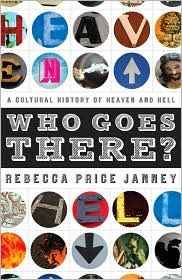
Who Goes Where There: A Cultural History of Heaven and Hell (Review)

When reviewing a book, there are many questions that I ask whilst reading. Some examples:
What is the author's thesis?
Does the author effectively work from/towards that thesis?
For what audience is the book best suited?
What are the negatives and positives about the work?
And what/how does this book add to the ongoing dialog of the Christian faith?

In Rebecca Price Janney's Who Goes there: A Cultural History of Heaven and Hell, I felt that her premise was 2 fold. One, to explore the attitudes of Heaven and Hell during different time periods in our nation; and two, to explore WHY the attitudes and theologies have changed over time. I have mixed opinions about whether she achieved these objectives or not. I think that she began this book with those two premises in mind, but quickly lets it give way to concluding that most people simply have poor theology on Heaven and Hell, and it has been that way for a while!

I'll begin with premise #1. Janney gives an American snapshot of the trend in our history to change our opinions on the subjects of the afterlife. She is very unbiased towards the fact that there was once a time when the majority (and I question her use of the word "majority") had "solid theology" on the subjects of Heaven and Hell. When was this time? Well it was none other than The First Great Awakening. Known for such tent/traveling preachers as Wesley, Whitefield, and Edwards, this was a booming time of what has become known as "Hell-fire and Brimstone Preaching". These preachers would come into town, set up shop, and people would flock to these events and buy whatever was being sold. I say that tongue-in-cheek, but let's think a little about the lifestyle of that time period.

Moral was low, the death-rate was high, all day was spent working (usually manual labor), and money was scarce among the masses. Who can blame people for flocking to an invitation given by one of these great orators that either 1) played on their already present fears, or 2) gave them a beacon of hope. People were wooed by these educated preachers because education was also poor in America at this time. It's not that dumb people fall for these messages, in fact I think it is that these average people longed for better understanding and education and "learned" from these people these doctrines they were pandering. Who would blame them? It makes complete sense that people thought more about Heaven and Hell at this point in time than any other since.

But for Janney, those were the "good old days". Americans have produced nothing but poor views on the subjects since. She chastises those who's understanding of Heaven is that "everyone good gets to go, except child-molesters and Hitler." I started thinking about this and I have to say, in all my years involved with churches and my time in ministry, I have NEVER once even heard a preacher say at a funeral, "well, Clive was a good guy, but since he never accepted Christ.... well, Clive's off to Hell now." It's not just the American populace and laity that think that people deserve to go to Heaven, even some of the most conservative ministers deep down do not act this out practically. Only when it is a concept from behind a pulpit, when we don't put faces to the concepts (except Hitler?!) is this taught with the utmost certainty.

But Janney doesn't mention this. And because she fails to accurately discover why most people's theology on the afterlife have changed, I feel that this book is truly not worth the read. Please understand, it has nothing to do with whether or not I agree with her theology on the subject! I don't recommend this book to anyone because she doesn't stay on her thesis, she is completely biased to the fact that any theology but her own is poor, and she truly misses out on a fantastic opportunity presented by this book. That opportunity comes with my last question I ask of a work:

What or how does this add to the ongoing conversation in our Christian faith?

I think that there are 2 thoughts that I conceived from this book.
1) There is a trend by many Christians, especially postmodern Christians, to NOT talk about the afterlife. I don't think its fair to say that theology has gotten weak, in fact, there has been some great theological thoughts on Salvation and the afterlife (both new and reclaimed) that has come out of this shift. But since the Heaven/Hell theology has been forced down many people's throats at the expense of equally important messages of Christ, there is a tendency to shy away from talking about or tackling the questions that people still have about the afterlife. We must focus on a holistic view of following Christ, and that means not ignoring any of these issues about which the Bible speaks. Janney, sort-of leads the reader to this conclusion, but sacrifices the calmer message for that of denouncing any theory of the afterlife except for the single one to which she herself adheres.

2) I think this is the more important question that Janney totally misses her opportunity on. When you have billions of people in the world, (Janney never really looks past the American geographical boundaries, but the phenomenon of which she speaks is world-wide) and over the past 100 years (or more) this idea of a different Heaven has emerged and held tight: the idea that it isn't about accepting Christ, but something bigger. That Heaven is a place that people deserve after the hell of this life, or because they are good people, or the myriad of the other beliefs out there. When are we going to let these theological concepts (and yes they can be considered theology, that one branch of Christianity does not have a patent on thinking about Heaven and Hell) dialog with more "traditional" ideas of the afterlife? If we believe that God is still at work and revealing himself...if we believe that theology is as Daniel Migliore defines it: "Faith seeking understanding," then we owe it to our own beliefs and certainties to face these challenging thoughts and questions. Who knows where it will lead us? I think we would find that these thoughts are far from "poor theology", and in fact, be shocked to find how well thought out and developed these ideas are.

When we push people and thoughts like this aside for our own "certainty", we miss out on many opportunities. I think this sums up Janney's book...a missed opportunity!

Find more reviews here!
Previous post w/ media here!

Feel free to leave any thoughts!

Monday, April 13, 2009


Jeffrey C. Pugh Speaks to my boy Tripp Fuller about his new book: Religionless Christianity: Dietrich Bonhoeffer In Troubled Times. I think this is a great podcast that you should listen to. Done with the love and care of all of Homebrewed's podcasts, this one shifts some thoughts about Bonhoeffer's genius and how it would apply today in a post-Christian shift.


A thought-provoking and challenging series of thoughts!

Thursday, March 12, 2009

Exploring Framing Stories(Part 3): Where do they come from?

I was recently asked, concerning my last post, to address from where framing stories come?

This is a tough question to answer in the confines of a blog post, so know that this is not comprehensive. However this should give one a good idea. Let's take a step back away from religious framing stories for a second. EVERYONE has a framing story (or sets of framing stories) that inform and affect their lives. Our individual framing stories are a mix of genetics and environment. Our framing stories are passed down from our families, education, culture, experiences, etc...

These framing stories inform our decisions, personality, preferences, and well... everything about us. We can't escape our framing stories, for without them we wouldn't be who we are!

Now back to religious framing stories. I'm going to stick to the overly-simplistic examples used in the first post of this series: the conventional and emerging.

We develop our faith/religious framing stories as we grow up. We inherit these frames from our church experiences (or lack of), our parent's/families' faith, and the religious culture from which in which we are exposed. We also feed back into this frame and culture. It also should be mentioned that our overall framing stories impact our religious FS, and visa-verse. It is truly a tangled web. Studies show that the #1 place from which we learn our faith practices are our parental figures. Church actually appears 3rd on the list.

Please understand that a person can inherit EITHER (or any) FS, not just the conventional. It just happens that in American Christianity, the conventional FS is the one that is inherited.

However, I think that although understanding where these FS originate is important, the question that is MORE important is WHY are so many people choosing to move away from their original Framing Story?

I use the work "choose" loosely. For the majority of people it is not a conscious decision to transition from the inherited framing story into a new one. Yet many (more every day) are realizing that they are indeed emerging out of and away from their original FS. The factors that inform this happening are as complex as are the factors that make up our original FS. In fact, the easiest way to understand WHY and HOW people move away from their original FS are the SAME factors listed above that inform their original FS. What changes? The overall frame. They move away from their family, they experience new cultures and cultural surroundings. They break free of the bubble of thoughts and ideas into a new surrounding. They explore their own thoughts, world, and beliefs through higher education (not just a college degree, but education derived from new experiences). What they are finding is that the conventional FS does not do a good job addressing the "new" reality in which they now find themselves. A reality that has always been there, but was outside of their spheres of influence as a child.

There is a lot we can learn from other's FS. Everyone's journey is unique to them. The greatest thing we can do is listen and share in each other's journeys! This will help us to understand each other's FS's, and hopefully, will help churches to embrace and even encourage people to explore and question their own framing stories. The pews should no longer be a place of forced conformity, but full of people who are diverse in their experiences and FS's, willing to listen and willing to share. Otherwise, I fear that the Church will not survive, or at least thrive, as more and more people continue to move away from the conventional FS (the one that most mainstream churches cling to), towards the emerging FS that addresses their reality.

Monday, March 02, 2009

Thoughts From A Wanderer

My friend, Mary, has 2 fantastic posts over @ Not All Who Wonder Are Lost. The first one I want to link to because I want to give her credit. We are all part of the same Bible study community, and spicifically one of her comments that she made (repeated in the post A Square Peg Goes To Church) inspired the thought pattern that led to me last posts.

This comment from Mary spicifically led me to my last posts:
I realized last week, that my framing story for God, theology and the body of Christ is NOT the same as many of those in my church. I kinda figured that out a long time ago, but it really became explicit for me. That realization helped me at least articulate why I felt like the square peg.
It is a good glimpse at how some of our conversations go, and how we bring our own experiences into our group to share and discuss. We have come up with some amazing questions and thoughts!!! Check it out, it's worth the read.

Also her newest post: Pro-Life=Pro-Baby was a direct comment from her tonight.

I post these links, not only to link to some good thought-provoking material, but also because I am proud to be in a group that 1) thinks critically about their faith, 2) lives and learns within the questions, and 3) (most importantly) is a free place to share one's thoughts, struggles, and disagreements openly and freely with a group that practices love and encouragement.

It is proving to me a point that many confrontational Christians have disagreed with me, that UNITY IS NOT CONFORMITY... instead it is acting in love and respect towards one-another regardless of our differences. We all acknowledge that we are broken people doing our best to become fully human (in all that means), and/or to become the person into whom God is making each of us!

We (Christians in churches) spend a lot of time alienating people who feel like "square pegs" instead of listening and learning from each other. What we would realize is that there is a communication problem...different framing stories mean we are speaking different languages! More and more people are finding that their framing story is not matching up with that of the conventional framing story as presented by the modern Church. The next question that led to my post from this was, "how then do we move forward in love once the problem has been diagnosed?" And thus we get to where the framing story posts have led thus far.

We keep splitting, pushing, and running away, but I'm here to tell you that:
IT IS POSSIBLE PEOPLE! :)
And I'm grateful to be a part of where it is happening!

Thank you Metavista Bible Study Group!!!!

Thursday, February 26, 2009

Exploring Framing Stories(Part 2): Trying To Move Forward!

In my last post we looked at the idea of "framing stories" and the 2 general framing stories that are alive in western Christianity. However, what happens once you define and establish which framing story (conventional, emerging or another), and you then find yourself at odds with other framing stories.

Using the examples from last post, the Conventional Framing Story is finding itself more and more at odds with the general public. Why? There are many reasons. What it most generally boils down to is that someone grows up exposed to the conventional framing story, but because of new experiences and education (not meaning formal ness., simply education that comes with experiences) when leaving home and the overwhelming influence of the conventional framing story. In other words, they experience a new and different reality. It can come from college classes, a change in lifestyle, visiting another country, studying global issues, or simply physically removing themselves from the conventional bubble they were accustomed to.

However it happens, more and more people are connecting with the emerging framing story(EFS). Those that cling to the conventional framing story(CFS), fight hard to hold control and power within that context. This leaves those in the new(yet I would argue more ancient/orthodox FS), in a conundrum. They are drawn into these arguments and thus the last 10 years that we have seen this EFS come to fruition has been riddled with debates and arguments. Alas, we are beginning to see that this way of doing things is getting us nowhere.

There is still this problem: we know that there are many people within the Church that are dissatisfied with the form of religion being fed to them, but are unaware that an alternative FS exists. Then there are those outside the Church that are not in connection with anyone who can offer them the emerging framing story. Thus they are left thinking that Christians only care about Heaven, hell, and fire insurance while ignoring the global issues of the day!

However, this EFS seeks to reconcile all of Christ's teachings and Biblical themes in the lives of people. This means that Christ has once again become our example Christian prioritization. Christ was most concerned about helping others. McLaren and others argue that Jesus himself came offering his 1st century contemporaries a NEW FS! In he midst of an empire that marginalized many and enforced their version of peace, the Pax Romana. There were many Jewish sects that fought over the right way to approach this empire that was suffocating them (Pharisees, Zealots, Essences, etc...), however Jesus came in to offer another way...God's way! And this new view offered by Jesus was the only way for which true peace and equality could be achieved. This is the FS that the EFS seeks to work within. One that cares about what Christ cared about, who seeks to follow his teachings and examples of life, not just the afterlife.

But what do we do? What comes next? Here we are with this EFS that is vital and relevant in today's world, and yet most of those that fall under the banner of "Christian" have not been exposed to this new option. Do we continue to fight? Do we campaign? What?

Again, let's look to Christ for an example.

Here was Christ, holding this new FS which was vital to the world, and he went low key. He didn't fight (although he had many chances). Instead he TRAVELED! He went from place to place teaching and showing what this new FS looks like. Along the way, he picked up more and more people who caught on and were captivated by this new FS. Yet, he didn't walk aimlessly. He walked TOWARDS the reality of seeing this FS come to fruition. He traveled TO the cross! Along the way he simply invited others to join in his journey. He never showed hatred, or acted non-compassionately towards those that didn't get or agree with his new FS. He simply, like the "Rich Young Man", allowed them to continue on their way. He allowed them to keep practicing what they felt was right, while continuing to live the life of this new FS.

A life of love,
Of Service
Of Sacrifice
Of Giving
Of Equality
Of Hope
Of Peace....

This is the EFS...The same FS we see in Christ!

Thoughts?

(Painting by Greig Leach: Jesus Washing The Disciples Feet)

Monday, February 23, 2009

Exploring Framing Stories(Part 1): What Are They?

As a photographer, one thing that you consider when taking a picture is what's called framing.  Framing Is deciding how to take the picture that best tells the story that you want to tell.  The picture here is one that I snapped while kayaking down the Colorado River on the Nevada boarder.  I decided that I wanted to capture the landscape and water, but I also wanted to frame the picture so that it told the story that we were kayaking in the middle of the beauty.  I also wanted it to tell the story that I was not alone, so I snuggled my kayak up next to my wife's (as close as we could get) to try and show the beauty and intimacy of our trip.  In other words, the story that I wanted to tell in the framing was that my wife and I were sharing in this beautiful experience in nature.  I know that myself and my wife are outside of the frame, but that is on purpose.  Framing stories don't always give away the full details at first glance.  

My Bible Study Group has been reading Brian McLaren's Everything Must Change on Sunday Nights and discussing it.  I have gotten far more out of the book this second time of reading because of 1) paying more attention to the details, and 2) because of the wonderfully insightful comments that have come from members of our group.  

One thing we talked about last night was the idea of the Framing Story: The story that informs how we understand and interpret life, culture, and religion.  Just like the picture analogy, the way that our story is framed and focused determines how we act and react to the world.  McLaren uses an example of 2 different religious/Christian framing stories.  

Conventional Framing Story: This says that basically we are all a sinful product of the choice of our Adam and Eve ancestors, and that we are all doomed to eternal punishment in hell because of this "original sin" and our "sinful nature".  Therefore, Jesus came to save our souls from hell and give our undeserving selves a chance to go to heaven because he took the place for us on the cross and through his resurrection and defeat of death.  However, this "grace", although offered to all, is only given to those who fall into the "selected category" (this is both the Calvinist view of predestination, and the view that only those who become a part of the selected religion, "Christianity").  "This is the Good News

In this framing story, the purpose of Christ was to "solve the problem of original sin, meaning that he helps qualified individuals not be sent to hell for their sin or imperfection.  In a sense, Jesus saves people...from the righteous wrath of God, which sinful human beings deserve because they have not perfectly fulfilled God's just expectations, expressed in God's moral laws.... Those who receive [offered grace] enjoy a personal relationship with God and seeks to serve and obey God, which produces a happier life on Earth and more rewards in Heaven".  (EMC pg. 78-79)

Emerging Framing Story: God created the world as good, but human beings have rebelled against God--both as individuals and groups-- and filled the world with evil and injustice.  God wants to heal humanity and the world from its sickness.  Left alone, humanity would spiral downward in this sickness and evil.  

Jesus came to address the question, "What must be done about the mess we're in?"  This question refers to the general state of the world as well as the specific context of "his contemporaries" living under domination of the Roman empire and the need for liberation.  

"Jesus' response to this says, 'I have been sent by God with this good news--that God loves humanity, even in its lostness,...God graciously invites any and all to turn from his or her current path and follow a new way.  ...You will be transformed, and you will participate in the transformation of the world, which is possible, beginning right now.' This is the good news. Jesus came to be the saviour of the world, meaning he came to save the earth and all it contains from its ongoing destruction because of [humanity]."(EMC pg. 78-80).

As part of his transforming community, we can experience liberation and participate in the liberation of others.  We can be partners in God's "global transformation and liberation," as well as deliverers of hope and justice.  
_--__--_-_

So here we are with 2 Christian Framing Stories.  It's kind-of like the picture.  I have other pictures taken where I zoomed in on the landscape.  The story that those frames tell is that I saw a canyon with  river.  But when I zoomed out and reframed the picture into its original context, we find that there is far more to the story than a pretty landscape.  We see a narrative form that involves a more accurate perspective: that we were actually floating on that pretty river between the canyon walls, which is a completely different experience altogether!

This is the same with looking at these different framing stories.  Many people are forsaking religion and church because they are working out of a different framing story than the conventional one put forward by our religion.  One that perhaps has zoomed in way too tightly in it's focus so that we've only been focusing on a portion of the picture.  Framing Stories are important, and I want to focus more on that in a second post.  

For right now, what do you think about "framing stories"?  What are other framing stories that you see or have experienced?  What does it mean when we are working with multiple framing stories under the same religion?   Where does this mean we go from here?

I know this is 101 for many people, but I am finding more and more people that need to hear this because they haven't heard it before.  I'll speak more about that in my second post.  

Your thoughts!

(Photo by Justin Bowman)

Thursday, January 29, 2009

Becoming Christian Vs. Being Christian

I've had many, many conversations centering around what the biggest thing is that makes them cringe when thinking about their past church experiences. A majority of the time it has to do with the over-used and abused message that we're all sinners, going to hell unless we say a prayer of salvation and accept Jesus as our "lord and Savior".  Now, before the hateful comments start coming, give ear to WHY this message is like fingernails on a chalkboard for many.
Let me begin with a story of my own.  As I posted recently, I lost my grandfather a little over a week ago.  He was a fantastic person with a life full of stories.  To me, he was the embodiment of what living looks like.  Yet at his funeral very little about his life was mentioned.  Now I disclaim that I had no say in the funeral, that was for my grandmother, mom, and uncles to prepare.  The pastor was placed in charge of everything, and so he did what he thought best.  I am not complaining nor criticizing...simply using this as an example.  

There was one story told of my grandfather.  The pastor did a fantastic job talking to the audience/family about the allowing their emotions to run their course.  But the majority of the time was the same old sermon that you can hear in most any church in America on any Sunday morning.  Rather than being about my grandfather, it was more about trying to appeal to everyone else to make haste and become a Christian so that you will know where you are going when you die.  

I know of many churches where this happens at every funeral the pastor presides over at their church.  I know of many more churches where this is the ONLY sermon/teaching that you will ever hear on a Sunday.  It gets old.  It loses its effectiveness.  I dare say, overexposure dilutes the enormity and significance of the death and resurrection of Jesus.  I dare say that even more, it leaves those that have become a Christian in this limbo because they are never taught what to do with that after, because each Sunday they have to hear the same message.  For many pastors its only about "getting them in and getting them saved".  Well, that doesn't cut it for the emerging world-view.  They want more!  They want to learn what it means to LIVE as a Christian.

Think about modern Christianity's focus in America.  It has, for the most part, been about becoming a Christian.  Now however, people want to experience the rich, active lives that faith brings them.  When these people read and study the teachings of Christ, they see less and less of a focus on becoming a Christian, and a huge focus on living a life of faith and vitality.  The focus has shifted from becoming Christian, to being Christian!

However, this is hard for churches to change, because the focus goes far deeper than the inability to prepare a different sermon each week. Take a look at our iconography.  The main icon of Christianity is that of the Cross.  The cross was an icon for the Romans and their subordinates long before Christians adopted it.  It was a symbol of pain, torture, empirical rule, conformity, and ultimately, death.  The symbols that the earliest Christians used was not the symbol of the Cross, rather they were symbols of life like the shepherd, the Ichthys (fish), and the lamb.  There are writings as early as the second century that speak of the use of the cross, but many historians agree that it wasn't until 326CE that the sign of the cross became a common and universalized symbol of Christianity.

Why 326CE? Because of the rule of Constantine who united Rome under the Cross.  In fact, Constantine took up the cross after his conversion as his banner of war.  The Cross has always meant "death".  When we hang the crosses in our churches, we are centering our subconscious and subliminal on the message of death.  I know that the message of the death and resurrection of Christ (this is why protestants adopted the empty cross icon over the crucifix) has been central, but we've also taken out the signs and thus the message of life; the lessons of living!

People today see enough suffering and death in the world.  They want a message of hope.  And while most Christians would agree that the story of Christ's death is essentially one of hope, the stock portrayal of that story is one of condemnation, sin, death, hell, and overall: hopelessness. These "fear tactics" overshadow any message of hope in the story.  There is a hunger for a new way to live.  A way to live out hope in our everyday lives.  A way to actually DO something about the pain and suffering in our world, which Jesus did indeed address far more than he did the message of death.  We are leaving people behind when we focus our attention only on the one message.  Rather, we should be modeling our churches after Christ; presenting a holistic message of practical living.  Living that involves love, peace, forgiveness, etc... 

People are hungry enough, and if they see the vitality of others living and helping, they will seek out how to become Christian, but are more interested and affected by being Christian first!

Thoughts?

(The picture above is of a Tau Cross, the earliest representations of the cross in Christianity.  Now best known in correlation with St. Francis of Assisi)

Monday, January 12, 2009

Biblical Criticism and Postmodern Christians

An interesting post by Tony Cartledge @ Campbell Divinity School over at his blog. The post is entitled: Biblical criticism, when the new becomes old. (click title and give it a read!)

Are those of us who embrace more postmodern methods of exegesis and interpretation throwing away the academic approaches we learned in our studies in favor of other preferred methods? Simply because we have moved past modernity, doesn't mean that we leave behind all of the experiences and methods available to us behind with it. That's assuming that we've truly left modernity behind, which I argue that we are still in transition and have not arrived.

No, if we are truly experience gatherers, then we must use as many tools at our disposal for understanding and interpreting the Bible as possible. If we don't, then we are not what we claim to be as postmodern Christians. In fact, it takes us away from our claimed "holistic approach" back to simply picking and choosing once again. It takes us out of the conversation, and puts us back in a bubble. It deceives us since it is a different bubble than the Christianity out of which most of us emerged, but it is still a bubble that ignores realities.

your thoughts?

Wednesday, January 07, 2009

Emerging Greatly

Something that a wise woman said to me over the summer keeps haunting me. She said that people are opposed to purposeful change because in order to pursue change one must admit that that which is the current approach is no longer working. In essence; admit that something is wrong...and no one ever wants to admit that something is wrong!

I know I've mentioned that before on here, but like I said, it keeps nagging at me. I have seen this in my own life. Ever since a year and a half ago when I was fired from the church I was working at because of power trips and protecting the status quo (see this post for the story), I have allowed myself to get depressed, lose management of myself, and completely change my lifestyle. Where I was once always bright, hopeful and energetic, I now found myself slow, sedentary, and pessimistic. If depressed is the opposite of vitality, then I was surely depressed.

Lately I've tried to take back control of my own life and one of the first things I realized I needed to do was loose the wait I had gained since losing my job. My wife has had a lot of success with Weight Watchers and so (along with many other new-years resolutioners) I signed up Monday. It focuses not on being a diet, but a change of lifestyle. And that is exactly what I need... I need to change my lifestyle in more than just my eating habits in order to completely move past the pain of being burned by people and a place I loved.

Before Monday could happen though, I had to come to a point where I was ready to admit that something needed to change. Something was not right, not optimal in my life, not VITAL, and thus CHANGE NEEDED TO OCCUR. I now better understand what that wise woman said to me last summer about change!

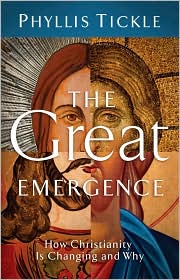
Of course, this hit me on a much deeper level as I've been reading The Great Emergence By Phyllis Tickle. In the first chapter she argues that the great emergence is happening in the world but churches usually take one of two positions on it. She draws a corollary between how churches approach the changing zeitgeist to how people approach changing seasons. (I've added a little to her analogy below)

1) They prepare for the upcoming season beforehand. They purchase gloves, scarves and hats for the winter, and sometimes even pull out the heavier fall jackets to address the transition even before the new season arrives.

2) They decide to wait until the new season arrives, see what it brings, and then decide if, when, and how they might change with the climate.

I would argue that there is a 3rd approach, which is simply no approach at all. This groups ignores the inevitable change at best, and argues loudly against it at worst.

Change is coming. There's nothing we can do to stop our world from progressing and changing. The question then becomes, "when are we going to admit that there is a need for us as Christians and the Church to change along with it in order to remain relevant and VITAL both THROUGHOUT the transition and when the new season has already arrived?" Like me deciding to make a lifestyle change, I had to stop wallowing in my own sloth and self-pity and become proactive. Likewise I think that many churches and Christians need to think about doing the same!

I say this, not to be degrading or cynical, but to hold a candle of hope. I don't hate the Church. I love the Church. If I didn't love her so much, then I would not have been hurt as bad as I was when she and her people threw me to the street. No, the church is like a lover who has gone astray and I pray for her return. I want to take part in any way I can in her revival and renewal. In the same way I love Christ. I love Christ even more than I do the Church. Yet since I love them both, I don't want to see them struggle and fight death and irrelevancy, because that is what many churches and Christians are fighting. I would much rather see them struggle to come up with new creative ways to remain relevant during the great emergence. Why? Because Christ is relevant as much now as he's ever been...maybe even more so than ever before. Why? Because people are searching. People are looking for a life worth living. People are looking for hope, love, joy, peace, and all of the other things that Christ brought.

It's a humbling experience to admit that something I really didn't want to face needed to change. But for my health....for my vitality...for those that I love, I sought out change!

Friday, December 12, 2008

2008 Book Superlatives

Last year I started my fav. books that I've read in the past year. I had many people comment (more in person than on here) on how much they liked that post. I don't have time to review each and every book that I read throughout the year, so this is a good time to at least let people see what some of my favorites have been, and also to give me feedback about books they have read and perhaps suggest I read. I am only counting books in here that I completed (there are many that I have started that came out this year and I have not gotten all of the way through (I'm too eager when I receive new books sometimes), so some that came out this year will prob. make next year's list! Enjoy!!!
___________________

Most Challenging Book
Atlas Shrugged, by Ayn Rand.

I listened to this book for over 4 months (it's long, but I was also that involved with it). I read essays on the book, and almost nightly, would go back and reread sections of the book that I had listened to that caught my attention. This was a book that has a great plot, but is philosophically motivated. Rand is quite blatant about her love for Capitalism, but it is an idealistic form of Capitalism. However, in the year that has transpired economically, this book is a huge challenge to our current philosophy of consumerist theory. Not just that, but from someone who believes in the driving power of the middle class, and doesn't believe that poverty is always a result of lack of effort and drive in America, this book challenged me on a philosophical, political, and spiritual level. It was my favorite fiction book of this year, and will continue to challenge me in years to come. If you have not read this book, PICK IT UP!

Best Book Involving War, Alien Abduction, and Becoming Unstuck in Time
Slaughterhouse-Five, by Kurt Vonnegut
Vonnegut was another author (like Rand) that I was not exposed to in HS or College yet should have been. I read this book in one sitting and then turned around and read it again. I've had some great conversations with others who love this book, and have recommended it to many people. This was my gateway into what I refer to now as the "Vonnegut drug". His dark humor came to me at a time where pessimism ran rampant in my life, and rather than bring me down further it actually lifted me up. His plots are ridiculous, yet so enticing and insightful that they become a window into our very souls. Vonnegut can pull out the worst of humanity and show us how ridiculous we can be. Another must-read for anyone who can read!

Most Refreshing Book
The Scandalous Gospel of Jesus: What's So Good About the Good News?, by Peter J. Gomes
This book is a no-nonsense book where the author (Harvard Divinity School and Harvard University's Memorial Church) speaks about how the Church has devolved itself into a place of fear and control. He compares his arguments about what the Church is to the subversive ministry and message of Christ. He proclaims, in short, that the Church today (not all churches, just the Church universal in general), like the religious institution in Christ's time, would be the very thing that his message and ministry opposed. This book is a gut-check to any minister, and a wake-up call to the Church proper. Gomes has put in the time and notoriety to be able to call it like he sees it. A challenging book that tops my favorite "spiritual books" of this year!

Most Scandalous Book
The Shack, by William P. Young
Yes, the most "scandalous" book this year did not have the word in the title. In fact, it was not meant to be scandalous at all, just an honest work of fiction that expressed the authors new understanding of God based on his own experiences (that are not represented in the plot of the book). This book has caused a LOT of controversy in the Church world this year. Just last week a family member was telling me that his pastor (who had not read the book, but seemed to have purchased it simply to wave it about on stage) spoke of the "evils" the book held. Even the most hit Christian reviewer, Tim Challies, has tried to turn Christians away from the "heretical theology"

With that being said, this book, for many others, has been a breath of fresh air. My Bible Study group spent 3 weeks discussing the book (and could have spent many more) and it has been some of the best discussion our group has had. We challenged the book and allowed it to challenge us. I think that this book is great for all Christians, and agree with it or not, it can challenge your beliefs as well as make many feel like they're finally not alone in some of the understandings of God that they have. Best Read and Discussed in a small group or with friends!

Best Use of Words/Coolest Cover
Jesus Wants to Save Christians: A Manifesto for the Church in Exile , By Rob Bell
Bell uses his gift at word-crafting to bring together several approaches to the Bible and Christianity that have been around for a while in the academic world. This in and of itself is great, but he does what he does best: makes them applicable to everyone in some of the most beautiful prose on the shelves. This book will not be anything new to some people, and to others it will be very eye-opening. It levels the playing field, so to say, between these academic understandings and the mission and ministry of the laity. We lack people in the Christian faith that can bridge that gap, and Bell is one of the best. The last part of the book is beautifully written, and can take your breath away. Inspiring, encouraging, and informative. very different from his other books, but still worth the read! Oh, and the cover is clever and gets everyone!

Best Series I Just Discovered
A Song Of Fire And Ice (Starting with book 1: A Game of Thrones), by George R. R. Martin
I began this series after several friends told me to pick it up. Now, I'm not one that spends much time in the Fantasy Genera, although I do like Tolkien. However, after much pestering I picked up A Game of Thrones and couldn't put it down. It has very little of what is usually thought of in the Fantasy isle, but is more of a book of medieval life, war, and the most brutal politics I've read.

Martin is famous for penning the TV series Beauty and the Beast, and returned to novels in this on-going series. Beyond the very complex storyline, he has a huge cast of characters that are unforgettable. You learn to both love and loathe his characters, and each are believably flawed individuals. I've read the first 3 of 4 books available (I think there will eventually be 7) in the series, and can't wait to pick it up again. Give this a chance, you won't be disappointed.

Best Book About Building a Cathedral
The Pillars of the Earth, by Ken Follett
I know, that superlative title doesn't sound interesting. Well it is! The Cathedral they are building actually becomes one of the characters in the book as alive and challenging as any of the ones made of flesh and bone. Spanning 3 generations in time, the struggles for the main characters to see the dream of the Cathedral being built and the life that it would bring to the monetary is epic. A historical fiction Chronicles the tough decisions that 12th century people have to make and the hard lives they had to face. This is all made tougher by the political and Ecclesial power struggles that persist. The characters are beautifully crafted and believable, and I truly see some parallels between then and today. This was on Oprah's book club for a reason. A fantastic book, and I can't wait to read the sequel.

Most Soul-Searching Book
Prayers for a Privileged People, by Walter Brueggemann
This book is beautifully crafted with some of the best written prayers I've ever seen. My on-going struggle with being a "have" while there are so many "have-nots" in the world was brought up-close and personal in this book. Although not by any means wealthy, I still live a life of greater wealth than much of the worlds population. These are truly prayers for privileged, and in no way diminishes or makes you feel bad about that. These prayers are earnest, yet still challenging in asking "what would you, God, have me do as a privileged individual?" Prayers for almost any situation and occasion, one of my favorite authors has crafted a book that I will continue to return to the rest of my life. Powerful, prophetic, and poetic... One of the most awe-inspiring books this year!

Favorite New Bible
The Voice, Thomas Nelson (Pub.)
Though only the New Testament at this point (oh please release a full OT and NT of this), the voice is a beautiful composition and compilation. By merging gifted writers in various media with the academic translators, what has been produced is what I consider to be the most beautiful and engaging translation of the NT to date. A dynamic translation, I like this far better than The Message and the NLT which are paraphrases. I promote this translation here and here (for more info). I know that the big Bible that many are drooling over this year is the new ESV Study Bible. However, after reading through it I find it slanted and still stiff in it's translation. The Voice is a new approach and tries to maintain the integrity of the translational process. This is the Bible that you will actually want to read with insightful commentary and creative approaches to reading the Bible. This Bible attempts to be balanced theologically (and succeeds well I think), while being an exciting and fresh new entry into the massive amounts of Bibles available today!

Best Book Filling The Harry Potter Hole In My Life
or Best Young Adult Read
Brisingr (Inheritance, Book 3), by Christopher Paolini
Book 3 of the Inheritance Cycle turned out to be a great book. The first book, Eragon, was great. The Second book, Eldest, drug a bit. But Brisinger was back to what made Eragon such a good read. Paolini began this series when he was only 15, and although it sometimes feels like it's ripping straight out of Star Wars or Lord of the Rings, Paolini is becoming quite an author with a great imagination. As mentioned above, not a huge fan of this genera, this series is proving to be enticing and epic. Written and marketed for young adults, like Harry Potter, this series is smart and can appeal to older crowds who simply want a good adventure story to grab on to!

Most Likely To Make You Uncomfortable
Pagan Christianity?: Exploring the Roots of Our Church Practices, by Frank Viola and George Barna
Like the subtitle says, this book is about exploring all of the Christian "traditions" most of us face every Sunday. From Steeple, to sermons, this book explores where these things come from that we claim are "rooted in scripture", as well as our tendency to habitualize them and raise them up to some sort of "sacred" level. But deeper still is something else entirely. It is a book that attempts to "unplug" Christians from these things that we get hung up on in our Christianity and to take a step back to see the bigger picture. One step further; to get involved with the bigger picture. A great book that can unsteady you, make you ask some good questions, wear flip-flops to church, and engage others in your faith community about why we do some of the things we do, and what should we be doing instead that is rooted in scripture, and thus, truly more "sacred".

Other Notables
Below are other books that have made a great impact on me this year, and I'm just running out of space. I promise, all of these books are worth your time.
In the Beginning: A New Interpretation of Genesis, by Karen Armstrong
Everything Must Change: Jesus, Global Crises, and a Revolution of Hope, by Brian D. McLaren
Amazing Spider-Man: Brand New Day

Hope you enjoy, leave me some of your fav. '08 books, or your feedback on any of these you've read